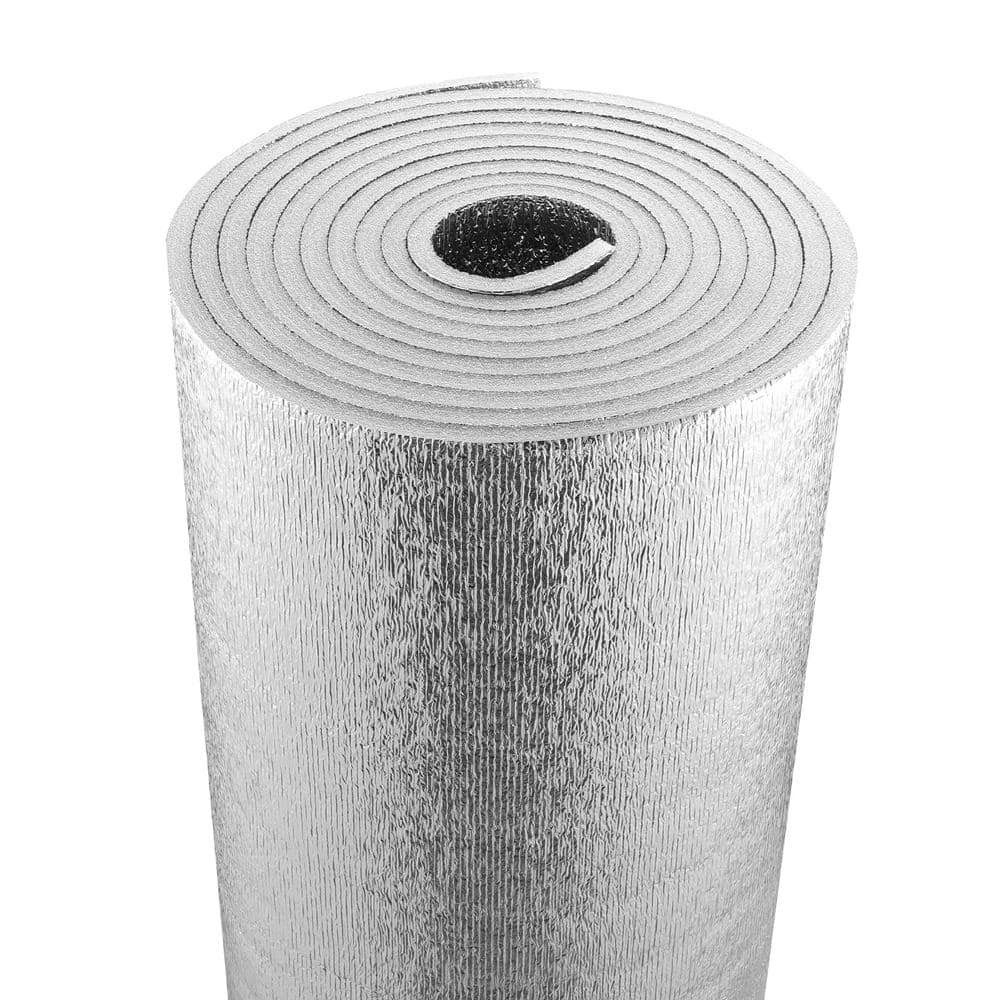
In building envelope systems, new energy battery packs, HVAC installations, and industrial thermal management, material integration is no longer optional — it is essential. Single-layer materials rarely meet the combined requirements of thermal insulation, moisture resistance, fire performance, lightweight design, and processing efficiency.
Foam laminated with aluminum foil has therefore become a widely adopted solution across engineering and converting industries.
Why Combine Foam with Aluminum Foil?
From a materials engineering perspective, this is a performance-driven composite structure.
The foam layer (such as IXPE, XPE, or PU) provides:
Cushioning and vibration damping
Acoustic absorption
Thermal insulation through closed-cell structure
Gap filling and conformability
The aluminum foil layer delivers:
High radiant heat reflectivity
Vapor barrier performance
Moisture resistance and corrosion protection
Surface durability and environmental shielding
The result is not a simple material stack, but a functional system integrating thermal management and structural protection.
Core Value: Beyond Basic Insulation
While many initially view this material as “thermal insulation,” its engineering value extends much further.
1. Enhanced Thermal Efficiency
Aluminum foil reflects radiant heat, reducing thermal transfer in curtain walls, roofing assemblies, piping systems, and equipment enclosures.
2. Condensation Control
The foil layer functions as a vapor barrier. Combined with closed-cell foam, it helps minimize condensation risks and improves long-term system durability.
3. Lightweight System Design
Compared with multi-layer traditional constructions, foam laminated with aluminum foil enables weight reduction — particularly important for:
EV battery pack insulation
Rail transportation interiors
Industrial equipment enclosures
4. Converting Compatibility
For die-cutters, laminators, and adhesive converters, this composite structure offers:
Stable die-cutting performance
Reliable bonding interface
Compatibility with secondary processing
In many cases, processing stability matters more than nominal material specifications.
Typical Application Scenarios
Curtain Wall & Building Envelope Systems Improves thermal performance, reduces energy loss, and helps control thermal bridging and condensation.
HVAC Duct Insulation External wrapping to reduce heat loss and enhance energy efficiency.
EV Battery Packs Applied in module insulation, liquid cooling plate perimeter cushioning, and thermal management zones.
Industrial Equipment & Piping Systems Combines thermal insulation with moisture resistance under demanding operating conditions.
Key Selection Considerations
Successful project performance depends on engineering details, not simply the presence of aluminum foil.
Critical parameters include:
Foam density and compressive strength relative to the application
Aluminum foil thickness and tear resistance
Lamination bond strength to prevent delamination
Fire performance rating compliance
Long-term thermal stability and aging resistance
Overemphasis on price often leads to downstream failures such as delamination, blistering, or condensation buildup.
Market Outlook: Where Future Competitiveness Lies
As global building energy standards tighten and EV battery systems demand increasingly precise thermal management, competition will shift from basic supply capability to material engineering sophistication.
Future differentiation will focus on:
Lower weight
Reduced thickness
Higher barrier performance
More stable lamination processes
Compatibility with automated converting lines
Long-term competitiveness will depend on manufacturing consistency, process control, and engineering support — not simply on material availability.
Foam laminated with aluminum foil is not merely an insulation product. It is an engineered composite designed to improve system-level performance.
Choosing the right structure is often more valuable than reducing unit cost.
Advanced foam materials for die-cutting converters, adhesive tape manufacturers, and end-use industries, including cross-linked polyolefin foam, silicone foam, microcellular PU foam, and supercritical foamed materials, widely used in new energy, electronics, industrial sealing and cushioning, and footwear applications.
Learn How We Can Support Your Project
Personalized Estimate and Consultation
See Our Proven Track Record with Clients
Access Detailed Product Technical Data Sheets (TDS)

 English
 العربية
 Français
 Русский
 Español
 Português
 Deutsch
 italiano
 日本語
日本語 한국어
한국어 Nederlands
 Tiếng Việt
 ไทย
ไทย Polski
 Türkçe
 አማርኛ
አማርኛ ພາສາລາວ
 ភាសាខ្មែរ
 Bahasa Melayu
 ဗမာစာ
ဗမာစာ தமிழ்
தமிழ் Filipino
 Bahasa Indonesia
 magyar
 Română
 Čeština
 Монгол
 қазақ
қазақ Српски
 हिन्दी
 فارسی
فارسی Kiswahili
 Slovenčina
 Slovenščina
 Norsk
Norsk Svenska
 українська
 Ελληνικά
 Suomi
Suomi Հայերեն
 עברית
עברית Latine
 Dansk
Dansk اردو
اردو Shqip
Shqip বাংলা
বাংলা Hrvatski
 Afrikaans
 Gaeilge
 Eesti keel
 Māori
Māori