Product Overview
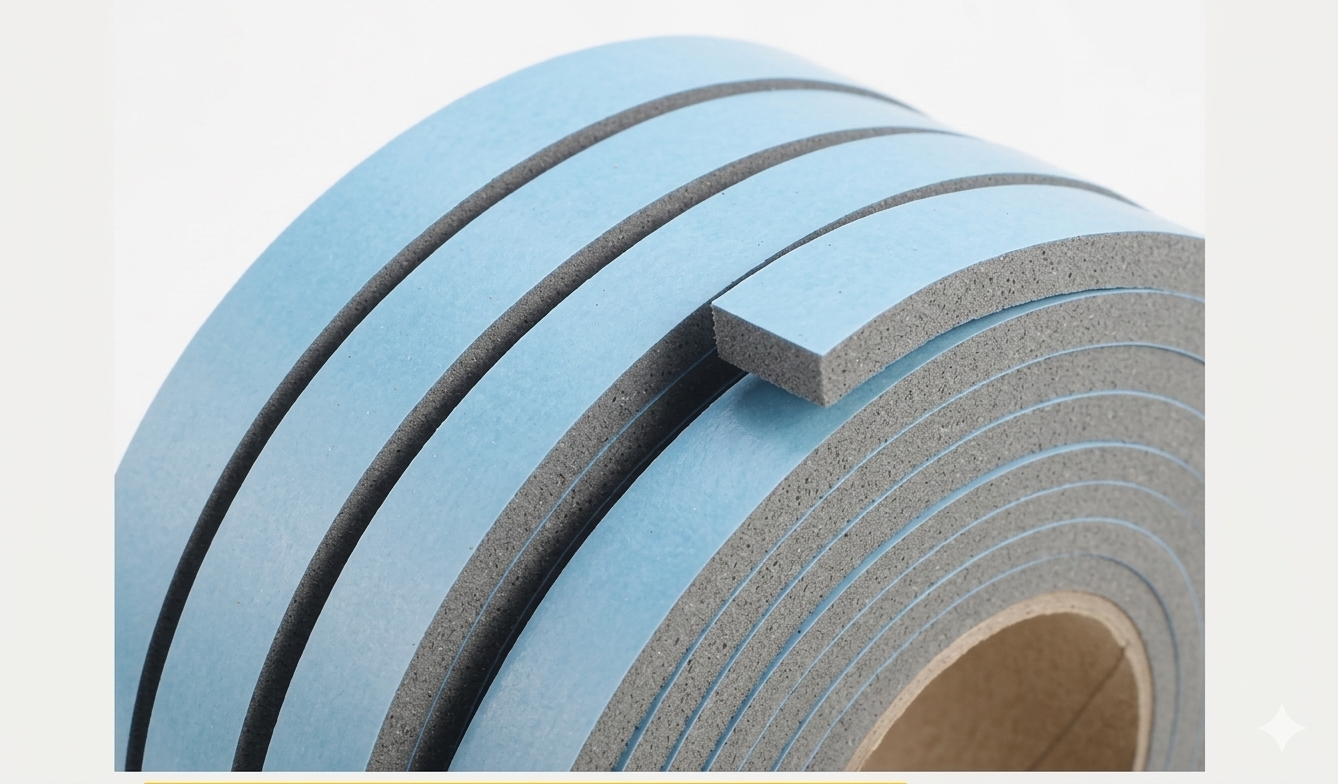
Curtain Wall Foam is a high-density polyurethane (PU) foam material designed for glass curtain wall systems and structural façade sealing applications. The material combines high compression resistance with low compression deformation, allowing it to provide stable structural support while maintaining long-term elasticity.
Its micro-cellular internal structure offers good breathability, which helps accelerate the curing of sealants and adhesives commonly used in curtain wall construction. At the same time, the foam exhibits excellent resistance to heat, humidity, and environmental aging, significantly improving the durability of curtain wall assemblies.
This material is widely used in glass–metal frame connections, joint filling, and façade insulation systems, where stability, sealing performance, and safety are critical.
Key Features
Low Thermal Conductivity
Improves the insulation performance of curtain wall systems.
High Tensile & Shear Strength
Provides strong structural support and impact resistance.
Excellent Flexibility & Surface Conformability
Adapts easily to curved or irregular surfaces.
Good Air Permeability
Helps accelerate curing of sealants used in façade systems.
Weather & Humidity Resistance
Maintains stable performance in long-term outdoor environments.
Customizable Dimensions
Suitable for various curtain wall joint designs.
Technical Specifications
| Property | Unit | Value | Test Method |
| Color | / | Black | / |
| Density | kg/m³ | 350 | ASTM D1667 |
| Tensile Strength | MPa | > 1.1 | ASTM D3574 |
| Elongation | % | ≥ 80 | ASTM D3574 |
| Compression Stress (10%) | kPa | 90 – 110 | ASTM D1667 |
| Thermal Conductivity | W/m·K | 0.099 | GB/T 10295 |
Application in Curtain Wall Systems
Curtain wall foam is mainly used in glass curtain wall structures to enhance system stability and sealing performance.
Typical applications include:
Fixing between glass panels and metal frames
Filling curtain wall expansion joints
Providing insulation and acoustic damping
Improving impact resistance and structural safety
Supporting sealant systems
By filling the structural gaps between glass and frame components, the foam helps maintain waterproof performance, reduce vibration transmission, and improve overall façade durability.
Customization Options

 English
 العربية
 Français
 Русский
 Español
 Português
 Deutsch
 italiano
 日本語
日本語 한국어
한국어 Nederlands
 Tiếng Việt
 ไทย
ไทย Polski
 Türkçe
 አማርኛ
አማርኛ ພາສາລາວ
 ភាសាខ្មែរ
 Bahasa Melayu
 ဗမာစာ
ဗမာစာ தமிழ்
தமிழ் Filipino
 Bahasa Indonesia
 magyar
 Română
 Čeština
 Монгол
 қазақ
қазақ Српски
 हिन्दी
 فارسی
فارسی Kiswahili
 Slovenčina
 Slovenščina
 Norsk
Norsk Svenska
 українська
 Ελληνικά
 Suomi
Suomi Հայերեն
 עברית
עברית Latine
 Dansk
Dansk اردو
اردو Shqip
Shqip বাংলা
বাংলা Hrvatski
 Afrikaans
 Gaeilge
 Eesti keel
 Māori
Māori


